
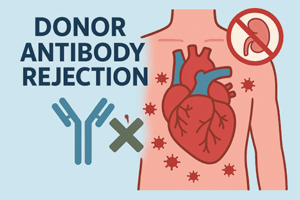
What Is Donor Antibody Rejection?
Donor antibody rejection occurs when the recipient’s immune system produces antibodies that attack the donor organ. Unlike traditional “cellular” rejection, which involves immune cells (T-cells) attacking the transplanted organ, AMR is driven by antibodies — proteins meant to protect us from infections but that, in this case, mistakenly target the transplant.
These antibodies usually recognize and attack HLA (human leukocyte antigen) proteins on the donor organ. HLA molecules are like ID tags that help the immune system recognize what’s “self” and what’s “foreign.” When the immune system sees a mismatched HLA, it can trigger an immune response.
Why Does It Happen?
Donor antibody rejection can happen in two ways:
-
Preformed antibodies (Hyperacute rejection): Some patients already have antibodies against donor HLA proteins before the transplant, often due to previous transplants, blood transfusions, or pregnancy. If these aren’t detected before surgery, they can cause a rapid and severe rejection within minutes to hours after transplantation.
-
Newly formed antibodies (Acute or chronic AMR): In other cases, the recipient’s body may start making new antibodies against the donor organ after the transplant. This can occur weeks, months, or even years later, leading to gradual damage or sudden rejection episodes.
Signs and Diagnosis
Unlike other forms of rejection, AMR isn’t always obvious right away. Common signs include:
-
Declining organ function (e.g., rising creatinine levels in kidney recipients)
-
Swelling or pain near the transplant site
-
Fever or flu-like symptoms
-
Shortness of breath (especially in heart or lung transplants)
Doctors diagnose AMR using a combination of:
-
Blood tests for donor-specific antibodies (DSAs)
These include Allosure, which measures donor-derived cell-free DNA. Another common test is AlloMap, which analyzes the expression of genes involved in the immune response. For kidney transplants, Prospera assesses the risk of rejection using cell-free DNA technology. TruGraf is a blood test that can identify silent rejection in kidney transplant recipients. Additionally, serum creatinine levels and donor-specific antibodies (DSAs) are also used.
-
Biopsies to look for tissue damage
-
Immunofluorescence and other lab techniques to detect antibody activity
Treatment Options
Treating antibody-mediated rejection is more complicated than other types. Standard immunosuppressants often aren’t enough because they don’t effectively stop antibody production. Treatments may include:
-
Plasmapheresis: A process that filters antibodies out of the blood.
-
IVIG (Intravenous immunoglobulin): Helps block harmful antibodies and calm the immune system.
-
Rituximab or other B-cell therapies: These target the cells that make antibodies.
-
Eculizumab: A newer drug that inhibits parts of the immune system involved in rejection.
Unfortunately, chronic AMR can lead to long-term organ damage, and in some cases, retransplantation may be necessary.
Feel free to contact me with any questions