Managing Caregiver Burnout and Stress: A Guide for Heart Transplant Supporters
Caring for a loved one who has undergone a heart transplant can be one of the most rewarding roles you’ll ever have—but it’s also one of the most demanding. Between managing medications, monitoring for signs of rejection or infection, and providing emotional support, caregivers often put their own needs last. Over time, this can lead to caregiver burnout—a state of physical, emotional, and mental exhaustion.
Recognizing burnout early and taking steps to manage it can protect your health and help you provide better care for your loved one.
Signs of Caregiver Burnout
Burnout doesn’t happen overnight—it builds gradually. Watch for:
-
Constant fatigue, even after rest
-
Increased irritability or mood swings
-
Difficulty concentrating or making decisions
-
Feeling hopeless, overwhelmed, or resentful
-
Withdrawal from friends, hobbies, or social activities
-
Changes in appetite or sleep patterns
-
Physical symptoms like headaches, stomach issues, or frequent colds
Why Burnout Happens in Heart Transplant Care
Caring for a transplant patient is unique because:
-
High vigilance is required — medications must be taken exactly as prescribed, and any unusual symptom could signal a serious complication.
-
Long recovery timelines — the first year after transplant involves frequent appointments, labs, and lifestyle changes.
-
Emotional intensity — you may feel constant worry about your loved one’s health or fear of rejection.
-
Lifestyle disruptions — work schedules, family life, and personal plans often shift to meet caregiving needs.
Strategies to Prevent and Manage Burnout
1. Set Realistic Expectations
You can’t do everything perfectly all the time. Focus on what matters most: medication adherence, safety, and emotional support. Small imperfections do not mean you’re failing.
2. Share the Responsibility
-
Involve other family members or friends in care routines.
-
Explore respite care options for short breaks.
-
Ask your transplant team about home health services or volunteer programs.
3. Protect Your Own Health
-
Keep your own medical checkups, exercise routine, and healthy diet.
-
Aim for quality sleep—short naps can help if nights are interrupted.
-
Manage stress with breathing exercises, meditation, or gentle physical activity like walking or stretching.
4. Stay Connected
Caregiving can be isolating. Keep in touch with friends, attend support groups (in person or online), and talk openly about your feelings with people you trust.
5. Use Professional Resources
-
Many hospitals offer caregiver counseling or support groups.
-
Social workers can help with navigating insurance, financial aid, and community programs.
-
Therapists can help process grief, anxiety, or guilt that sometimes accompany caregiving.
The “Oxygen Mask” Rule
It may feel selfish to take time for yourself, but just like on an airplane, you need to put on your own oxygen mask before helping someone else. You’ll be a better caregiver when your physical and emotional reserves are replenished.
Specialized Heart Transplant Caregiver Resources
-
American Society of Transplantation (AST) – Caregiver Toolkit
A comprehensive resource designed specifically for caregivers of organ transplant recipients (including heart transplants). Covers caregiving responsibilities, self-care, legal and financial considerations, relationship dynamics, and cultural factors. American Society of Transplantation -
AST – Heart Transplant–Specific Toolkit
A detailed, heart transplant–focused extension of the AST toolkit, developed with support from leading organizations in transplantation. American Society of Transplantation -
American Transplant Foundation – Transplant Caregiver Resource Guide
A curated list offering emotional, educational, and financial support resources for informal caregivers in the transplant community, including mentorship and financial aid guides. American Transplant Foundation+1 -
Gift of Life Howie’s House – “Transplant Caregivers: A Guidebook for Emotional Wellness”
A free downloadable guidebook focused on the emotional wellness of transplant caregivers, including tools for support during the post-transplant period. Gift of Life Howie’s House -
TCH Caregiver’s Heart – Transplant Caregiver Support Community
A peer-led, online “Circle of Support” specifically for transplant caregivers that provides connection, empathy, and shared experiences. TCH Caregiver Support -
A Heart’s Journey – Patient & Caregiver Guide to Heart Transplant
An interactive and multimedia resource developed by the Ted Rogers Centre in partnership with major heart transplant centers. Offers expert insight, personal stories, and tools to guide caregivers through each stage of the transplant journey. Ted Rogers Centre for Heart Research
General Caregiver Burnout & Stress Resources
-
American Heart Association – Resources for Caregivers
Includes practical materials (like PDFs), communication tips, emotional support guidance, and self-care resources tailored for caregivers of heart disease and stroke patients. www.heart.org -
Verywell Health – “Types of Caregiver Burnout and How to Prevent It”
Covers physical, mental, and emotional signs of burnout and offers strategies—like delegating tasks, using organizing apps, leveraging support groups—to help prevent or manage burnout. Verywell Health -
Verywell Mind – “Signs of Caregiver Burnout and Finding Balance”
Highlights the physical and emotional symptoms of burnout and proactive strategies such as adopting self-care, seeking breaks, and asking for help. Verywell Health -
Verywell Mind – “10 Doctor-Recommended Ways to Take Care of Yourself as an Alzheimer’s Caregiver”
While focused on Alzheimer’s care, the recommendations—like meditation, support groups, goal setting, and professional help—are broadly applicable to transplant caregivers. Verywell Mind -
Wikipedia – “Caregiver Stress” & “Caregiver Burden”
Offers evidence-based information on stress symptoms—such as increased risk of high blood pressure, compromised immunity, shortened life expectancy—and highlights coping strategies like mindfulness, training, and support groups. Wikipedia+1
Additional Support Resources
-
Family Caregiver Alliance (FCA)
A national nonprofit dedicated to improving caregivers’ quality of life, offering education, support, and advocacy. Wikipedia -
National Family Caregiver Support Program (Central Ohio – COAAA)
Provides caregiver workshops, counseling, respite services, and assistance through the Area Agency on Aging network. Particularly relevant if your audience includes caregivers in Ohio. coaaa.org -
American Heart Association – “Resources for Our Support Network Caregivers”
Tailored resources for long-term caregivers, including guidance on decision-making, assistive tools, family meetings, and community support. supportnetwork.heart.org -
CaringBridge – “14 Life-Changing Tips to Relieve Caregiver Stress”
Offers practical, real-world strategies to relieve stress that are easy to implement in daily life. CaringBridge
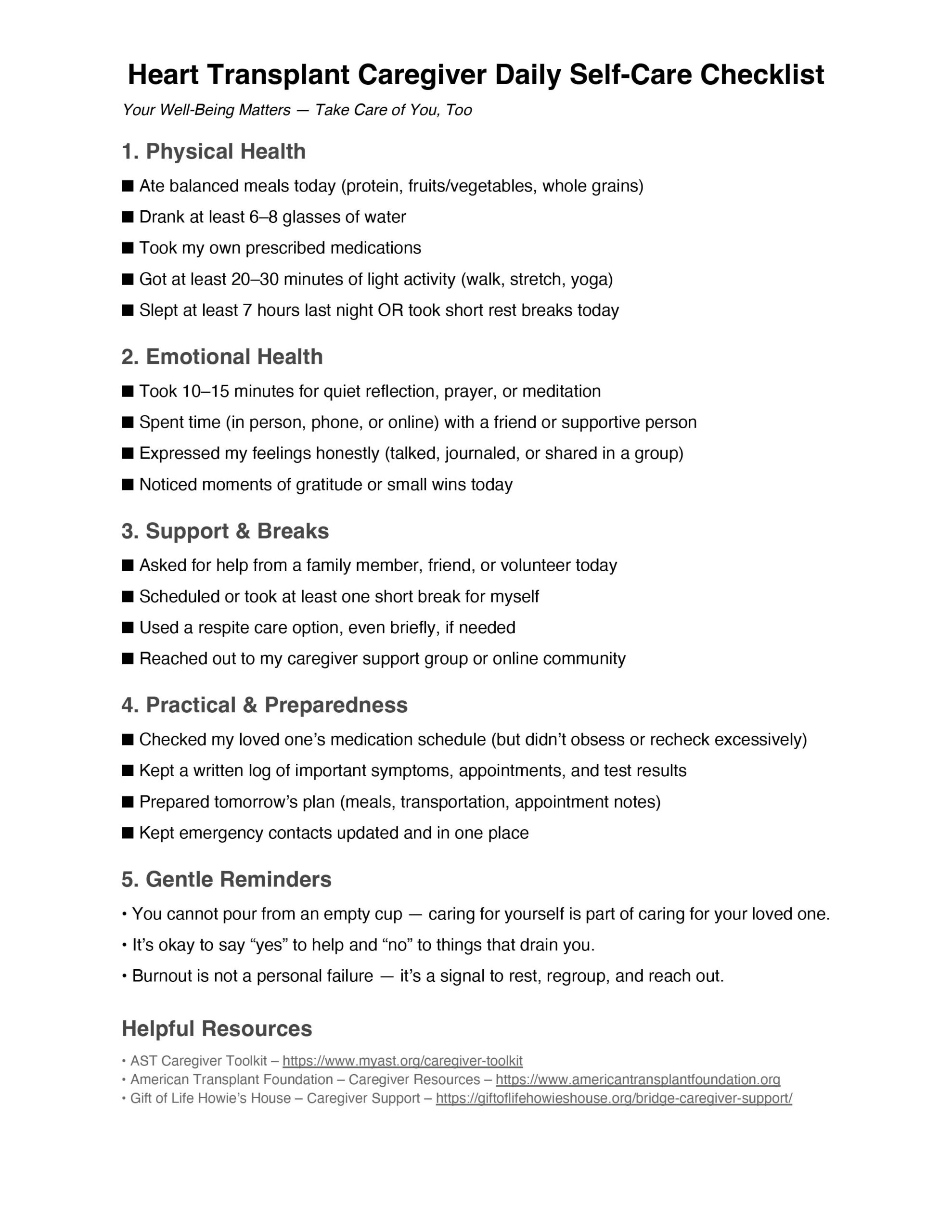
Below is a printable checklist